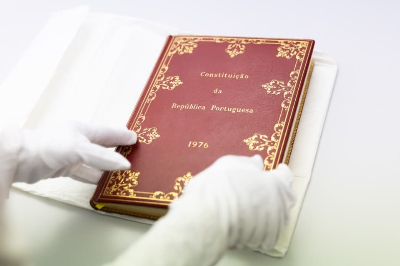
© www.portugalresident.com
Португалія відзначила 50 років із дня ухвалення своєї Конституції — документа, який визначив напрямок розвитку країни після падіння авторитарного режиму. Для португальського суспільства ця дата стала не лише приводом для урочистостей, а й моментом переоцінки пройденого шляху. У державних заявах Конституцію називають основою сучасної демократії, підкреслюючи її роль у закріпленні принципів рівності, прав і свобод. Водночас тон офіційних виступів був радше стриманим: йшлося не стільки про святкування, скільки про відповідальність за збереження цих принципів у нових умовах. Під час парламентських заходів звучали оцінки, які повертають до контексту її появи. Конституцію описували як результат моменту історичної невизначеності, коли країна, виходячи з авторитарного минулого, фактично визначала власне майбутнє. У цьому сенсі вона сприймається не як застиглий текст, а як документ, що продовжує працювати разом із суспільством.
Публічні дискусії довкола ювілею показали, що ставлення до Конституції залишається подвійним. З одного боку, вона є символом переходу до демократії. З іншого — її дедалі частіше оцінюють крізь призму сучасних проблем: нерівності, доступу до житла, навантаження на соціальні системи. У цих дебатах Конституція постає не лише як гарантія прав, а як орієнтир, який не завжди повністю реалізується на практиці. Суспільні діячі у своїх заявах наголошували на необхідності не втрачати початковий зміст документа. Йшлося передусім про базові речі — повагу до людини, солідарність і відповідальність держави перед громадянами. При цьому акцент змістився від формальних оцінок до більш прикладного питання: як ці принципи працюють сьогодні. У цьому контексті часто звучала думка, що демократія не є завершеним проєктом. Її стан залежить від участі громадян і довіри до інституцій. Саме це, а не лише текст Конституції, визначає стійкість політичної системи.
Історичний контекст
Сучасна Конституція Португалія була ухвалена 2 квітня 1976 року після Революція гвоздик — події, що поклала край багаторічній диктатурі, пов’язаній з режимом Антоніу де Олівейра Салазар та його наступників. Революція, ініційована військовими, швидко отримала підтримку суспільства і відкрила шлях до глибоких змін: скасування цензури, політичної лібералізації та деколонізації. У цих умовах було обрано Установчі збори, які підготували новий Основний закон. Конституція 1976 року закріпила перехід до демократичної республіки та визначила модель держави, що поєднує політичні свободи із соціальними гарантіями. Саме ця комбінація багато в чому сформувала сучасний вигляд країни.
Portugal’s Constitution at 50: how a document of transition shaped the modern state
Portugal has marked 50 years since the adoption of its Constitution — a document that set the course for the country’s development after the collapse of authoritarian rule. For Portuguese society, the anniversary has served not only as a moment of commemoration, but also as an opportunity to reflect on the path taken over the past half-century. In official statements, the Constitution is described as the foundation of modern democracy, credited with embedding the principles of equality, rights and freedoms. Yet the tone of the commemorations has been notably restrained. Rather than celebration alone, there has been a clear emphasis on the responsibility to uphold these principles under changing political and social conditions.Speeches in parliament have returned to the circumstances of the document’s creation. The Constitution has been portrayed as the product of a moment of uncertainty, when the country, emerging from an authoritarian past, was effectively defining its own future. In this sense, it is seen not as a static legal text, but as a framework that continues to evolve alongside society.
Public debate around the anniversary reflects a more complex view. On one level, the Constitution remains a symbol of the transition to democracy. On another, it is increasingly examined through the lens of present-day challenges — inequality, access to housing, and pressure on public services. In these discussions, it appears not only as a guarantor of rights, but also as a benchmark against which reality does not always measure up. Public figures have stressed the importance of preserving the original intent of the document. Their focus has been on fundamental principles — respect for the individual, social solidarity, and the responsibility of the state towards its citizens. At the same time, attention has shifted from formal recognition to a more practical question: how effectively these principles function today. In this context, a recurring theme has been that democracy is not a finished project. Its resilience depends less on constitutional wording alone than on civic participation and trust in institutions. It is this, as much as the text itself, that underpins the stability of the political system.
Historical background
The current Constitution of Portugal was adopted on 2 April 1976, following the Carnation Revolution — the event that brought an end to decades of dictatorship associated with António de Oliveira Salazar and his successors. Initiated by the military, the revolution quickly gained widespread public support and opened the way for sweeping reforms: the abolition of censorship, political liberalisation and decolonisation. In this context, a Constituent Assembly was elected to draft a new constitutional framework. The 1976 Constitution established the foundations of a democratic republic and set out a model combining political freedoms with extensive social guarantees. It is this combination that has, to a large extent, shaped the country’s modern trajectory.
3433