©
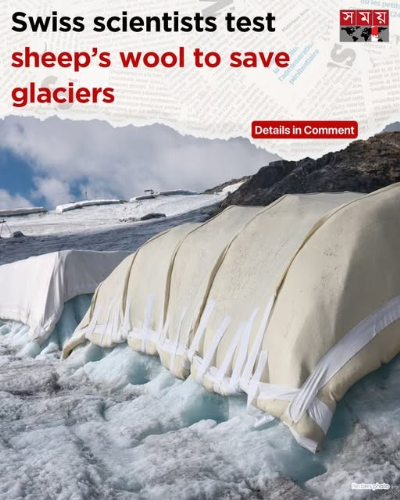
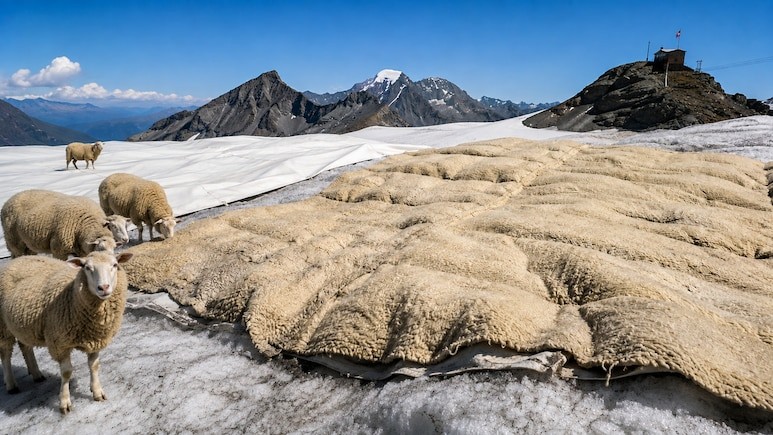
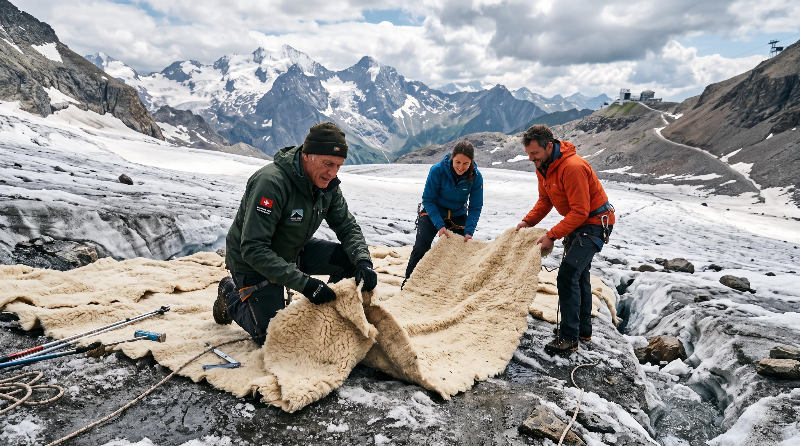
На льодовику Tsanfleuron в Альпах цього літа з’явилися 200 квадратних метрів вовни. Дві ковдри розміром 10 на 10 метрів накрили лід поруч із такою самою ділянкою, захищеною традиційним синтетичним геотекстилем. Експеримент Keep It Wool, який проводять Summit Foundation та Університет Лозанни, мав відповісти на просте запитання: чи може природний матеріал працювати не гірше за пластик? Перші результати виявилися напрочуд переконливими: вовняні покриття сповільнювали танення приблизно так само ефективно, як синтетичні.
Ідея має ще один несподіваний бік. Швейцарія виробляє овечу вовну, значна частина якої сьогодні фактично не використовується — за оцінкою авторів проєкту, щороку втрачається від 40 до 70% місцевої вовни. Натомість синтетичні полотна, які вже багато років використовують на окремих ділянках льодовиків, можуть із часом вивільняти мікроволокна. Вовна є природною, відновлюваною та біорозкладною — тобто тут йдеться не лише про захист льоду, а й про пошук нового застосування місцевій сировині.
Але швейцарці не називають вовняні ковдри порятунком для Альп. Захисними полотнами сьогодні накрито лише близько 0,02% площі швейцарських льодовиків. Вони можуть зберегти приблизно 300 тисяч кубометрів снігу на рік — мізер порівняно з майже мільярдом кубометрів льоду, які втрачаються щороку. Тож справжня історія Keep It Wool не в тому, що вовна переможе глобальне потепління. Вона в тому, що навіть у боротьбі за останні клаптики льоду Швейцарія намагається замінити пластик природним матеріалом — і цього літа цей експеримент, схоже, спрацював.
swissobserver.com
Under a Glacier Blanket: Switzerland’s Sheep’s Wool Experiment
This summer, 200 square metres of wool appeared on the Tsanfleuron Glacier in the Alps. Two 10-by-10-metre woollen blankets were laid over the ice alongside an equivalent section covered with conventional synthetic geotextile. The Keep It Wool experiment, led by the Summit Foundation and the University of Lausanne, set out to answer a simple question: could a natural material perform as well as plastic? The first results have been surprisingly encouraging: the woollen coverings slowed the melting at roughly the same rate as their synthetic counterparts.
There is another unexpected side to the idea. Switzerland produces sheep’s wool, much of which currently goes unused — according to the project’s organisers, between 40 and 70 per cent of domestic wool is lost each year. Synthetic fabrics, meanwhile, have been used for years to protect selected sections of glaciers, but can eventually release microfibres. Wool is natural, renewable and biodegradable, meaning the experiment is not only about protecting the ice, but also about finding a new use for a largely neglected local resource.
But Swiss researchers are not presenting woollen blankets as a rescue plan for the Alps. Protective coverings currently shield only around 0.02 per cent of Switzerland’s glacier area. They may preserve roughly 300,000 cubic metres of snow each year — a tiny amount compared with the nearly one billion cubic metres of ice being lost annually. The real story of Keep It Wool, then, is not that wool can defeat global warming. It is that, even in the fight to preserve the last fragments of Alpine ice, Switzerland is looking for a way to replace plastic with something natural — and this summer, the experiment appears to have worked.
1121