©
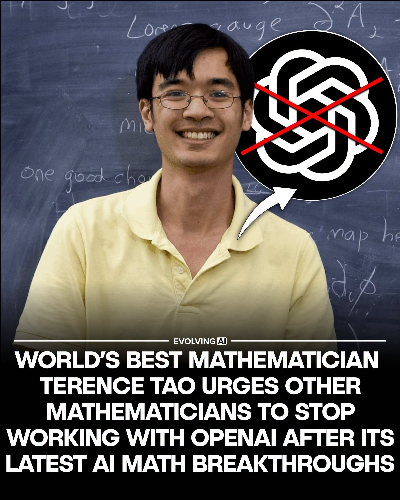
Асоціація людської математики (Association for Human Mathematics, AHM) закликала математиків припинити співпрацю з OpenAI. Причиною стала публікація 6 жовтня 722 математичних робіт, створених внутрішньою моделлю штучного інтелекту компанії, яка поки не доступна широкому загалу. Матеріали, об’єднані у 372 тематичні групи, охоплюють спроби розв’язати відкриті математичні задачі, нові доведення та спростування відомих гіпотез.
В AHM наголошують, що математична спільнота не просила OpenAI проводити ці дослідження. Одночасну публікацію сотень файлів організація назвала «демонстрацією сили, а не науки» й розкритикувала компанію за нехтування усталеними нормами наукової роботи та рекомендаціями консультативної групи з питань математики й штучного інтелекту. OpenAI, зі свого боку, заявляє, що залучала незалежних фахівців до обговорення формату публікації. Компанія розмістила матеріали на GitHub, передбачивши правила цитування та виправлення помилок; частину доведень подано у формалізованому вигляді, що дає змогу перевіряти їх за допомогою комп’ютера.
Some Amazing Facts
Ця суперечка загострилася після вересневої заяви OpenAI про те, що її модель знайшла розв’язання проблеми існування та гладкості рівнянь Нав’є—Стокса — однієї із семи задач тисячоліття. Заява викликала питання щодо незалежної перевірки результатів, доступу до закритих ШІ-моделей і визнання внеску дослідників. Критики застерігають: компанії, які мають ексклюзивний доступ до найпотужніших систем штучного інтелекту, можуть отримати істотну перевагу над рештою наукової спільноти. Тож дискусія стосується не лише можливостей ШІ, а й фундаментальних принципів наукового поступу: прозорості, перевірності результатів і ролі людського розуміння у створенні нового знання.
Mathematicians urge boycott of OpenAI
The Association for Human Mathematics (AHM) has called on mathematicians to stop working with OpenAI following the company’s publication, on 6 October, of 722 mathematical papers generated by an unreleased AI model. Grouped into 372 thematic collections, the papers include attempted solutions to open mathematical problems, new proofs and disproofs of established conjectures.AHM argues that the mathematical community never asked OpenAI to undertake this work. It described the simultaneous release of hundreds of files as “a show of strength, not science” and accused the company of disregarding established research standards and the recommendations of an advisory group on mathematics and artificial intelligence. OpenAI, for its part, says it consulted independent experts on how to publish the results. The papers have been made available on GitHub, alongside citation guidelines and procedures for correcting errors. Some proofs have also been formalised in a way that allows them to be checked computationally. The dispute has intensified following OpenAI’s claim in September that its model had found a solution to the Navier–Stokes existence and smoothness problem, one of the seven Millennium Prize Problems. The announcement raised questions about independent verification, access to closed AI models and the recognition of researchers’ contributions. Critics warn that companies with exclusive access to the most powerful AI systems could gain a substantial advantage over the wider research community. The debate, therefore, extends beyond AI’s capabilities to the fundamental principles of scientific progress: transparency, verifiable results and the role of human understanding in the creation of new knowledge.
18