© Facebook Ukrainian World Congress
«Невидимий павільйон» (Invisible Pavilion) несподівано став одним із найбільш обговорюваних мистецьких проектів цьогорічної Венеції. Європейські медіа описують його не як традиційний національний павільйон, а радше як «антипавільйон», «простір відсутності» та «меморіал знищеній культурній присутності». Проєкт виник на тлі головної політичної суперечки Бієнале-2026 — повернення російського павільйону після кількарічної паузи, спричиненої повномасштабною війною проти України.
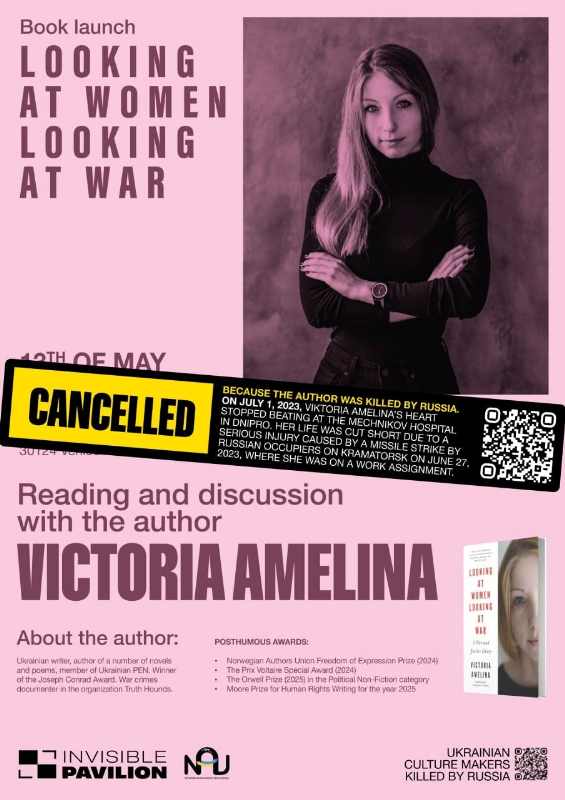
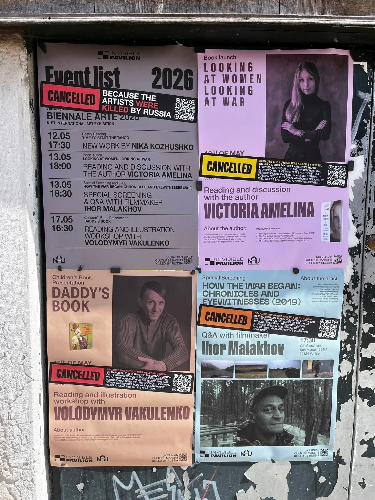
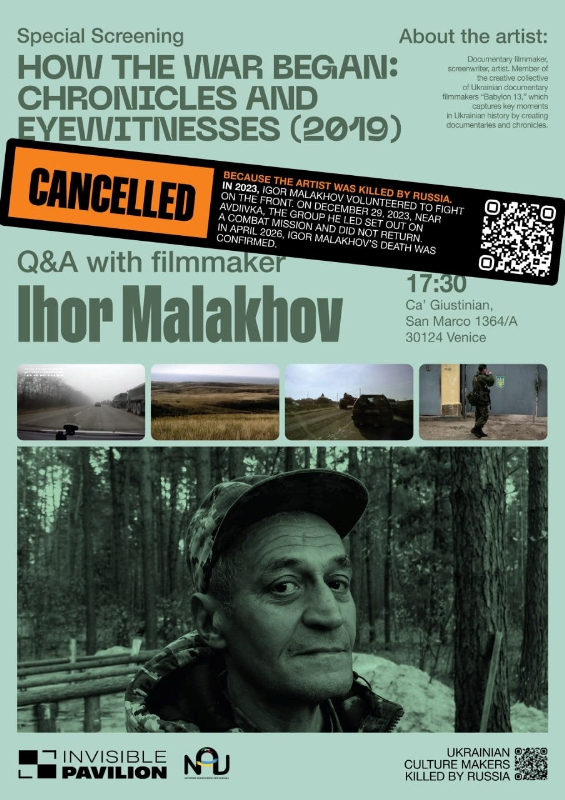
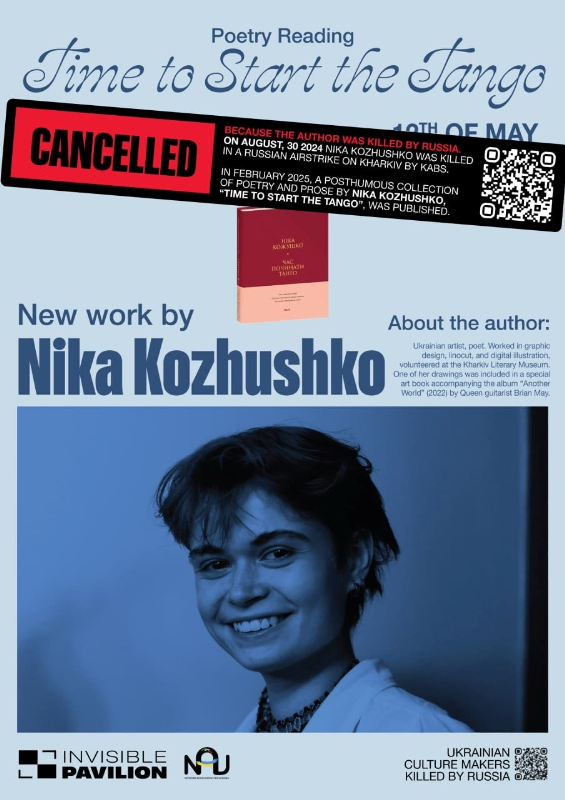
Саме в цьому контексті українська ініціатива почала стрімко з’являтися у міжнародній культурній пресі — від ArtReview і Frieze до Le Monde та The Guardian. «Невидимий павільйон» не має звичного виставкового простору. Його головним художнім жестом стала сама відсутність. Венецією розмістили афіші, плакати та анонси «подій, яких не буде»: виставок, концертів і перформансів українських художників, режисерів і музикантів, убитих Росією під час війни.
Критики наголошують: Україна відповіла на повернення Росії не масштабною інституційною виставкою, а «естетикою порожнечі». Для багатьох оглядачів саме це виявилося одним із найсильніших художніх висловлювань нинішньої Бієнале. У матеріалі ArtReview автори пишуть про бієнале-2026 як про момент, коли «мистецтво остаточно перестало бути нейтральним». У цьому контексті «Invisible Pavilion» називають однією з найпотужніших моральних реакцій на повернення Росії до міжнародного мистецького простору.
Французьке Le Monde пов’язує український проєкт із ширшою критикою російського cultural soft power — спроб Кремля відновити міжнародну культурну присутність через великі мистецькі інституції. Видання наголошує, що саме українські акції у Венеції сьогодні нагадують Європі про ціну війни для культури — не символічну, а буквальну. У міжнародних арт-блогах проєкт уже називають «ghost pavilion» — «павільйоном-привидом», «the pavilion that does not exist» — «павільйоном, якого не існує» та «memorial pavilion» — «меморіальним павільйоном».
Особливу увагу критиків привернула сама структура проєкту: відсутність фізичного центру змушує глядача буквально шукати його містом. У результаті Венеція перетворюється не на простір однієї виставки, а на карту втрат, розкиданих між туристичними маршрутами, палацами й павільйонами національних держав.
Ukraine Turns the “Aesthetics of Absence” into One of the Most Powerful Gestures of the 2026 Venice Biennale
Ukraine’s “Invisible Pavilion” has unexpectedly emerged as one of the most widely discussed artistic interventions of this year’s Venice Biennale. European media outlets have described the project not as a conventional national pavilion, but rather as an “anti-pavilion”, a “space of absence” and a “memorial to a destroyed cultural presence”. The project appeared against the backdrop of the Biennale’s most contentious political issue: the return of the Russian pavilion after a multi-year absence following Russia’s full-scale invasion of Ukraine. It was within this context that the Ukrainian initiative rapidly entered international cultural discourse, drawing attention from publications including ArtReview, Frieze, Le Monde and The Guardian. Unlike the monumental national exhibitions traditionally associated with Venice, the “Invisible Pavilion” has no fixed exhibition space. Its central artistic gesture is absence itself. Across Venice, posters, billboards and announcements advertise “events that will never happen”: exhibitions, concerts and performances by Ukrainian artists, filmmakers and musicians killed by Russia during the war. Critics argue that Ukraine responded to Russia’s return not with a large-scale institutional exhibition, but with what many have called an “aesthetics of emptiness”. For numerous observers, this became one of the most striking artistic statements of the Biennale. In a feature on the 2026 Biennale, ArtReview described the exhibition as a moment when “art has finally ceased to be neutral”. Within that broader political landscape, the “Invisible Pavilion” has been framed as one of the strongest moral responses to Russia’s re-entry into the international art world. French newspaper Le Monde connected the Ukrainian project to a wider critique of Russian cultural soft power — the Kremlin’s attempts to restore international cultural legitimacy through major artistic institutions. The paper argues that the Ukrainian interventions in Venice serve as a reminder to Europe of the true cost of war for culture: not symbolic, but literal. In international art blogs and independent commentary, the project has already acquired a series of unofficial names: “ghost pavilion”, “the pavilion that does not exist” and “memorial pavilion”. Particular attention has focused on the structure of the project itself. The absence of a physical centre forces visitors to search for the pavilion throughout the city. As a result, Venice is transformed not into the site of a single exhibition, but into a fragmented map of loss scattered between tourist routes, palazzos and the national pavilions of sovereign states.
2059