© Public domain
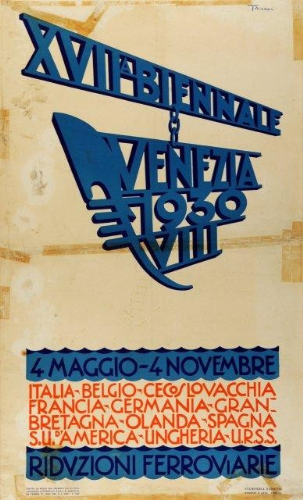
Дослідники українського авангарду та історики мистецтва вважають, що саме участь українських модерністів у Бієнале 1920–1930-х років стала одним із перших міжнародних проривів українського мистецтва у Європі. Однією з ключових подій стала XVI Венеційська бієнале 1928 року, де в межах радянського павільйону фактично існувала окрема українська секція. Це був безпрецедентний випадок: жодна інша республіка СРСР не мала такого рівня автономного представлення. Саме тоді у Венеції були представлені художники школи Михайло Бойчук та бойчукісти: Василь Седляр, Іван Падалка, Кирило Гвоздик та Тимко Бойчук. Їхні роботи експонувалися у 1928 та 1930 роках і викликали значний інтерес європейської критики. Дослідники наголошують, що саме успіх української секції у Венеції став одним із факторів підозри радянської влади до «національно орієнтованого мистецтва».
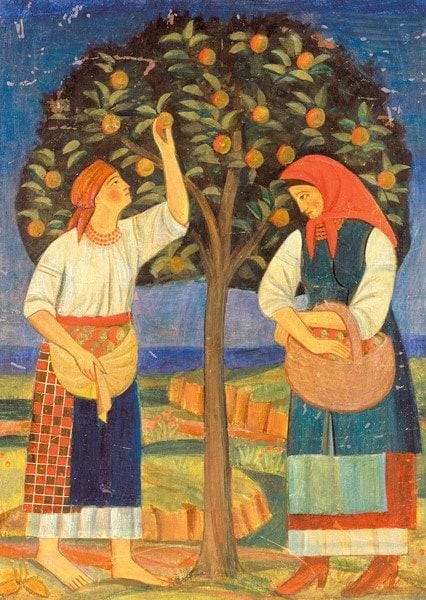
"Білі яблуні" Тимофій Бойчук, 1919-1920 рр.
У науковому дослідженні Олени Кашуби-Вольвач та Марини Дроботюк «Українське мистецтво на XVI Венеційській Бієнале» аналізується формування української експозиції 1928 року, реакція європейської преси та роль українських митців у міжнародному модернізмі. Авторки підкреслюють, що українська експозиція мала власну художню ідентичність навіть у межах радянського представництва. Особливу увагу дослідники приділяють Розстріл у Межигір’ї Василя Седляра — роботі, яка стала одним із символів українського мистецтва «Розстріляного відродження». Сам художник був репресований і розстріляний у 1937 році під час сталінського терору.
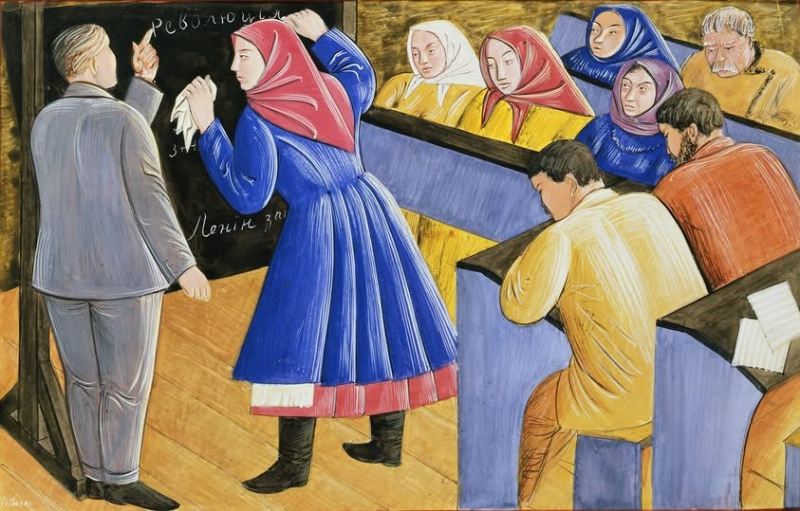
Василь Седляр. У школі лікнепу. 1929 р.
Після знищення школи бойчукістів Україна фактично втратила міжнародну мистецьку присутність на десятиліття.
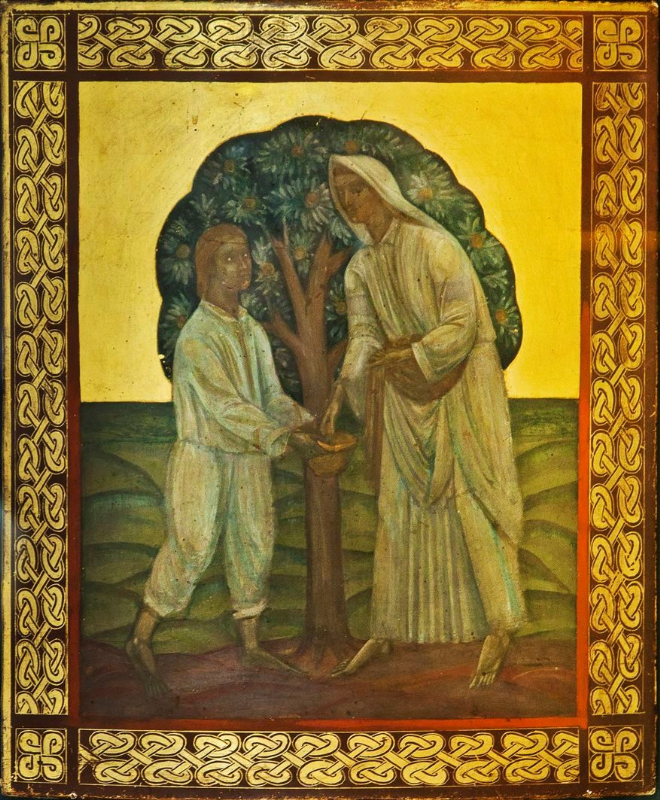
"Двоє під яблунею" Михайло Бойчук, 1910 р.
Лише після незалежності країна повернулася до Бієнале вже як окремий учасник. Серед найважливіших українських павільйонів новітнього часу мистецтвознавці називають павільйони 2001 року (з проєктом Ілля Чічкан), 2015 року (в контексті війни після Майдану) та 2022 року.
Українська тема помітно посилила свою присутність у Венеції після початку повномасштабної війни— не лише через офіційний павільйон, а й через численні незалежні проекти, присвячені війні, культурній пам’яті та вбитим українським митцям. Серед них — ініціатива Невидимий павільйон, яка нагадує про українських культурних діячів, загиблих під час російської агресії.
Історична довідка:
Михайло Бойчук — український художник-монументаліст, педагог і один із ключових творців українського модернізму ХХ століття. Народився 1882 року на Тернопільщині. Навчався у Львові, Кракові, Мюнхені та Парижі, де сформував власну мистецьку концепцію, що поєднувала традиції візантійського іконопису, мистецтва Київської Русі та українського народного живопису з мовою європейського модернізму.
Навколо Бойчука сформувалася група художників і учнів, яких згодом почали називати бойчукістами. Серед найвідоміших — Василь Седляр, Іван Падалка, Софія Налепинська-Бойчук, Тимко Бойчук, Оксана Павленко. Вони працювали у жанрі монументального мистецтва — створювали фрески, мозаїки, театральні декорації, книжкову графіку та розписи громадських будівель. Мистецький напрям бойчукістів отримав назву бойчукізм або неовізантизм. Його головною ідеєю було створення нового українського національного мистецтва, здатного поєднати європейський авангард із традиціями Сходу та української культури.Наприкінці 1930-х школа була знищена сталінським режимом. У 1937 році Михайла Бойчука та більшість його учнів розстріляли за сфабрикованими звинуваченнями у «націоналізмі». Майже всі монументальні роботи бойчукістів були знищені, а сам напрям десятиліттями замовчувався в радянській історії мистецтва.
Ukrainian Artists at the Venice Biennale a Century Ago
Researchers of the Ukrainian avant-garde and art historians argue that the participation of Ukrainian modernists in the Venice Biennale during the 1920s and 1930s marked one of the first major international breakthroughs for Ukrainian art in Europe. One of the defining moments came at the 16th Venice Biennale in 1928, where a distinct Ukrainian section effectively existed within the Soviet pavilion. At the time, no other Soviet republic enjoyed such a visible level of artistic representation. It was in Venice that works by Mykhailo Boychuk’s school and the Boychukists were presented to an international audience, including Vasyl Sedliar, Ivan Padalka, Kyrylo Hvozdyk and Tymko Boychuk. Their works were exhibited in both 1928 and 1930, attracting considerable attention from European critics and curators. Scholars of the period note that the growing international visibility of the Boychukists, alongside their distinctly Ukrainian artistic language, later intensified Soviet suspicion towards what was labelled “nationally oriented art”.
The academic study Ukrainian Art at the 16th Venice Biennale by Olena Kashuba-Volvach and Maryna Drobotiuk examines the formation of the Ukrainian exhibition in 1928, the response of the European press and the role Ukrainian artists played within the broader context of international modernism. The authors emphasise that the Ukrainian section retained a recognisable artistic identity even within the framework of the Soviet representation. Particular attention has been given to Vasyl Sedliar’s painting Execution in Mezhyhirya (Rozstril u Mezhyhir’i), now regarded as one of the defining works of Ukraine’s “Executed Renaissance”. Sedliar himself was arrested and executed during Stalin’s purges in 1937. Following the destruction of the Boychukist school, Ukraine effectively disappeared from the international art scene for decades. It was only after independence that the country returned to the Venice Biennale as a separate participant.
Art historians cite the pavilions from 2001 (designed by Illia Chichkan), 2015 (set against the backdrop of the war following the Maidan) and 2022 as among the most significant Ukrainian pavilions of recent times.
The Ukrainian presence in Venice has grown markedly since the beginning of the full-scale war — not only through the official national pavilion, but also via numerous independent projects addressing war, cultural memory and the killing of Ukrainian artists and cultural figures. Among them is the Invisible Pavilion initiative, dedicated to commemorating Ukrainian cultural figures killed during Russia’s aggression against Ukraine.
Historical Background
Mykhailo Boychuk was a Ukrainian monumental artist, educator and one of the central figures of early twentieth-century Ukrainian modernism. Born in 1882 in what is now western Ukraine, he studied in Lviv, Kraków, Munich and Paris, where he developed an artistic vision that combined Byzantine iconography, the art of Kyivan Rus and Ukrainian folk painting with the language of European modernism.
Around Boychuk emerged a circle of artists and students later known as the Boychukists. Among the most prominent were Vasyl Sedliar, Ivan Padalka, Sofiia Nalepynska-Boychuk, Tymko Boychuk and Oksana Pavlenko. Working primarily in monumental art, they created frescoes, mosaics, theatre scenography, book graphics and large-scale public murals. The artistic movement became known as Boychukism, or Neo-Byzantinism. Its central ambition was to forge a new Ukrainian national art capable of uniting the European avant-garde with Eastern artistic traditions and Ukrainian cultural heritage. By the late 1930s, the school had been systematically destroyed by Stalin’s regime. In 1937, Mykhailo Boychuk and many of his students were executed on fabricated charges of “nationalism”. Almost all monumental works created by the Boychukists were destroyed, while the movement itself was erased from Soviet art history for decades.
2610